
Manual Pallet Truck
Home >> Products >> Manual Pallet Truck
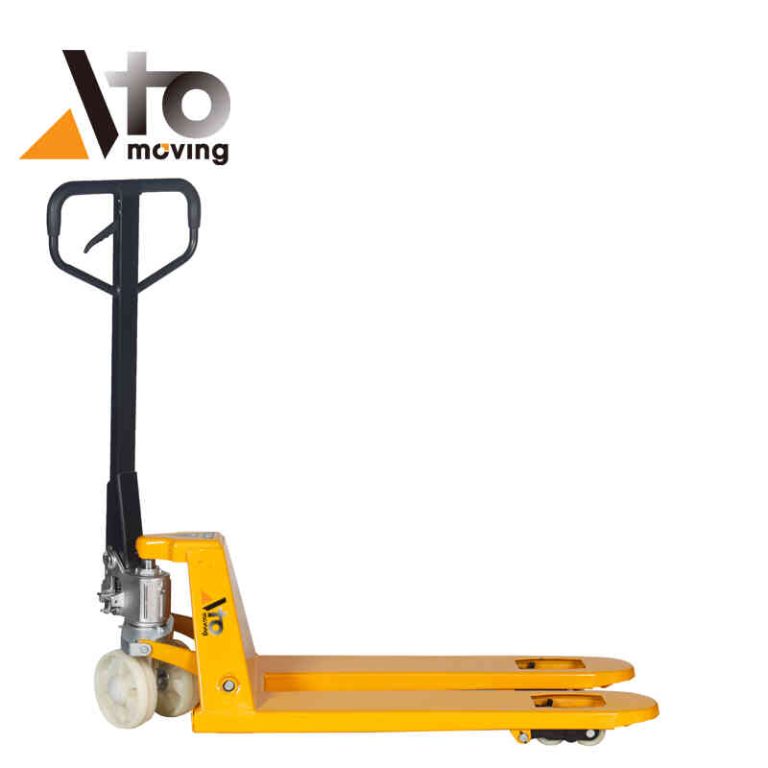
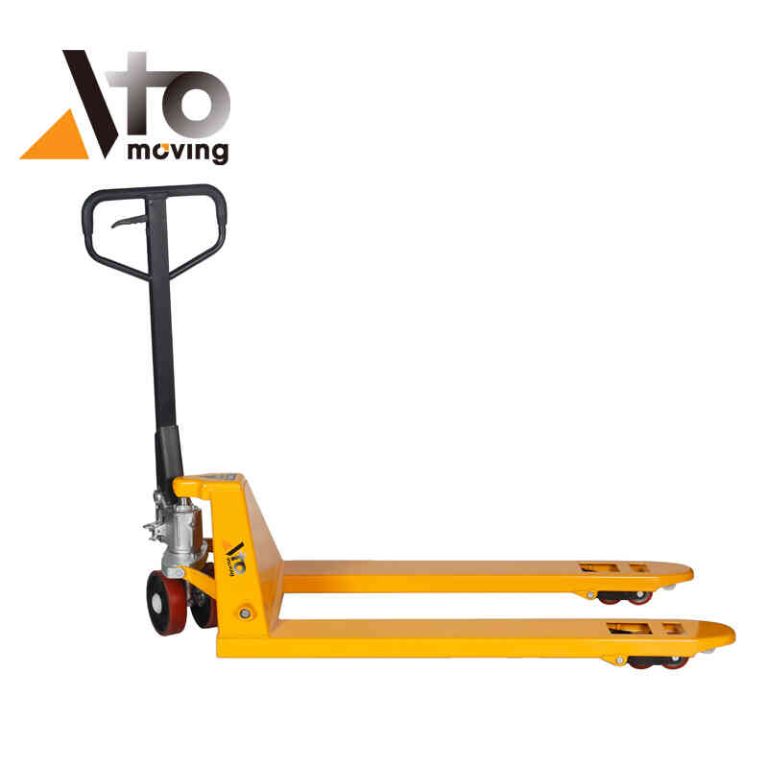
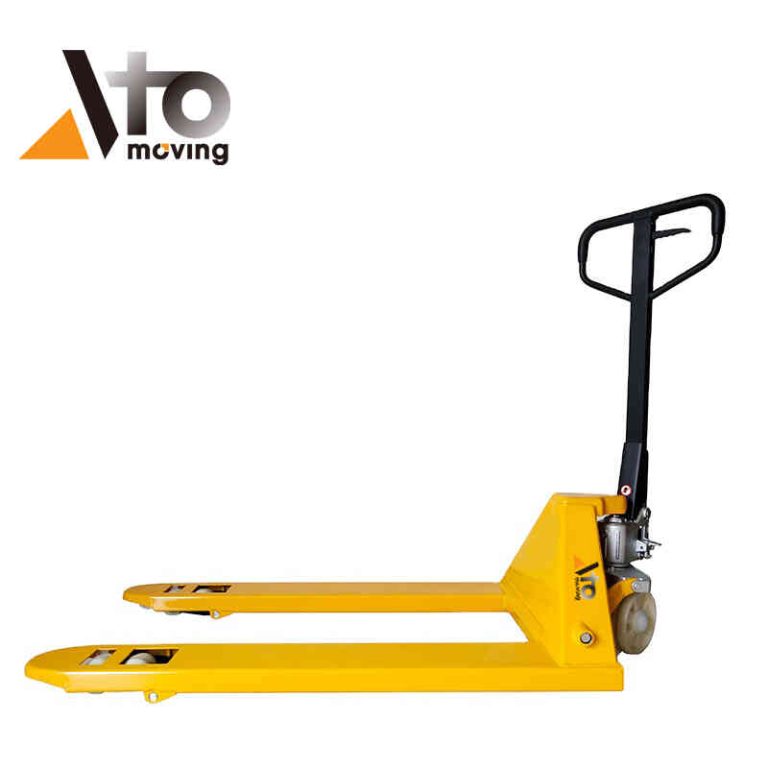
Hydraulic Pallet Truck 3500KG
- High-Displacement Hydraulics: Features an oversized 35mm (1.4 in) piston pump to generate maximum lifting pressure with minimal operator effort.
- Heavy-Duty Construction: Chassis fabricated from 4mm (0.16 in) thick steel plate ensures structural rigidity under full loads.
- Enhanced Mobility: Equipped with large 200mm (7.9 in) steering wheels for superior rolling resistance and maneuverability.
- Precision Alignment: Integrated adjustable push rods allow for long-term fork leveling and reduced maintenance intervals.
- Pallet Entry System: Standard guide wheels facilitate smooth fork insertion, protecting both the load rollers and pallet boards.
This industrial-grade hydraulic pallet truck is engineered for heavy-duty material handling applications requiring a Safe Working Load (SWL) of 3500kg (7716 lbs). Designed to outperform standard 2.5-ton units, it features a reinforced chassis built from 4mm (0.16 in) steel, ensuring the forks remain twist-resistant during cornering maneuvers. The unit is optimized for warehouse efficiency, utilizing a high-performance hydraulic system with a 35mm (1.4 in) piston that reduces the pump strokes required to reach lift height. With its robust construction and ergonomic design, this truck delivers reliable throughput for logistics centers, manufacturing floors, and freight terminals handling dense or oversized cargo.
Model for Hydraulic Pallet Truck
| Model | HP35 | |
|---|---|---|
|
Loading Capacity |
kg |
3,500 |
|
Lifting Height |
mm |
200/190 |
|
Lowered Height |
mm |
85/75 |
|
Overall Fork Width |
mm |
520/550/685 |
|
Overall Fork Length |
mm |
1150/1220 |
|
Steering Wheel |
mm |
Φ180×50 |
|
Single Fork Wheel |
mm |
Φ80×70/Φ74×70 |
|
Double Fork Wheel |
mm |
Φ80×93/Φ74×93 |
|
Turning Radius |
mm |
1249/1319 |
|
Ground Clearance |
mm |
32 |
|
Net Weight |
kg |
75-85 |

Request an Equipment Quote
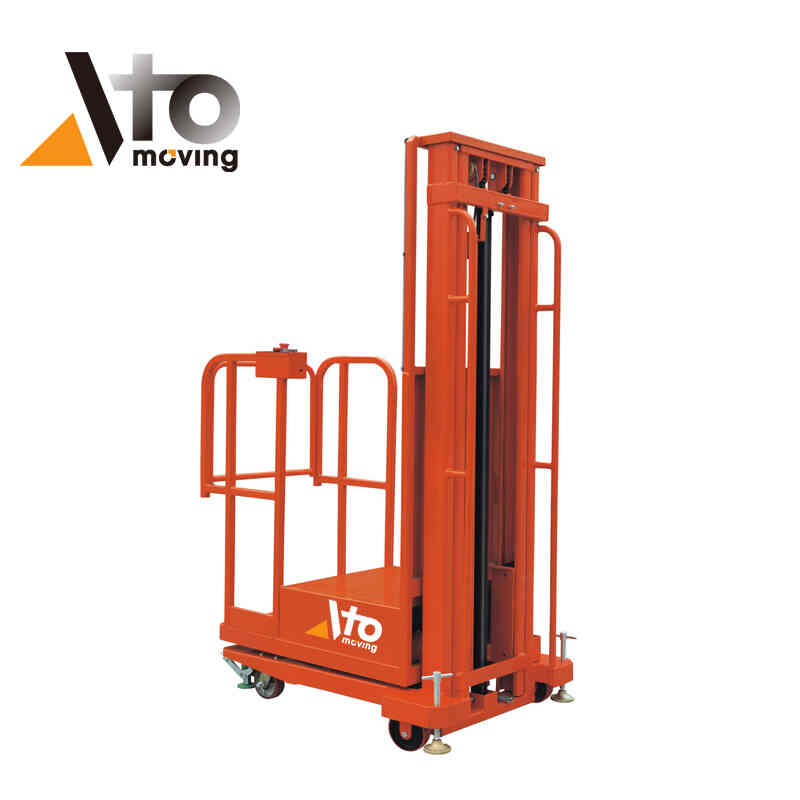
More Material Handling Equipment
Performance
High-Performance 35mm Hydraulic Pump
The core of this unit’s lifting capability is its oversized hydraulic pump featuring a 35mm (1.4 in) diameter piston. Compared to standard 32mm systems, this larger displacement cylinder generates higher hydraulic pressure per stroke, allowing operators to lift 3500kg (7716 lbs) loads with significantly reduced handle force. The pump housing is designed to withstand internal pressure spikes common in heavy industrial usage, ensuring consistent elevation and controlled lowering speeds even when the truck is loaded to maximum capacity.
4mm Reinforced Steel Chassis & Wheel Configuration
Structural deformation is the leading cause of pallet truck failure. To mitigate this, this model utilizes 4mm (0.16 in) thick steel plating for the A-frame and forks, providing superior tensile strength compared to the industry-standard 2.75mm or 3mm frames. This durability is complemented by large 200mm (7.9 in) steering wheels, which lower the rolling resistance coefficient, making it easier to initiate movement on concrete or epoxy warehouse floors. This combination ensures the truck maintains its geometric integrity under heavy stress.
Extended Lifecycle & Maintenance Features
Engineered for long-term ROI, the undercarriage features adjustable push rods rather than fixed linkages. This allows maintenance teams to mechanically re-align the forks if they become uneven after years of heavy cycling, effectively extending the equipment’s service life. Additionally, the fork tips are equipped with standard guide wheels (entry rollers). These sacrificial components absorb the impact when entering bottom-boarded pallets, preventing wear on the primary load wheels and reducing shock transfer to the hydraulic system.
Frequently Asked Questions
Should a pallet truck be pushed or pulled?
A manual pallet truck should be pushed rather than pulled whenever possible. Pushing provides better control, reduces strain on the operator’s back and shoulders, and lowers the risk of accidents or injuries. Pulling a pallet truck can reduce visibility and stability, making it less safe in most warehouse and workplace environments.
Does OSHA require training for manual pallet jacks?
Reference
[1] Jungheinrich UK. “Hand Pallet Trucks”. Jungheinrich UK, Accessed February 22, 2026. https://www.jungheinrich.co.uk/products/new-forklifts/pallet-trucks/hand-pallet-trucks.
[2] Nationwide Handling. “Do You Need a Licence to Use a Pallet Truck? Training & Safety Explained”. Nationwide Handling, Accessed February 22, 2026. https://www.nationwidehandling.co.uk/post/do-you-need-a-licence-to-use-a-pallet-truck-training-safety-explained.
[3] Monroe Engineering. “5 Common Types of Pallet Jacks”. Monroe Engineering, Accessed February 22, 2026. https://monroeengineering.com/blog/5-common-types-of-pallet-jacks/.
[4] BHS. “Stacking Pallets: OSHA Regulations”. BHS, Accessed February 22, 2026. https://na.bhs1.com/blog/post/stacking-pallets-osha-regulations.